

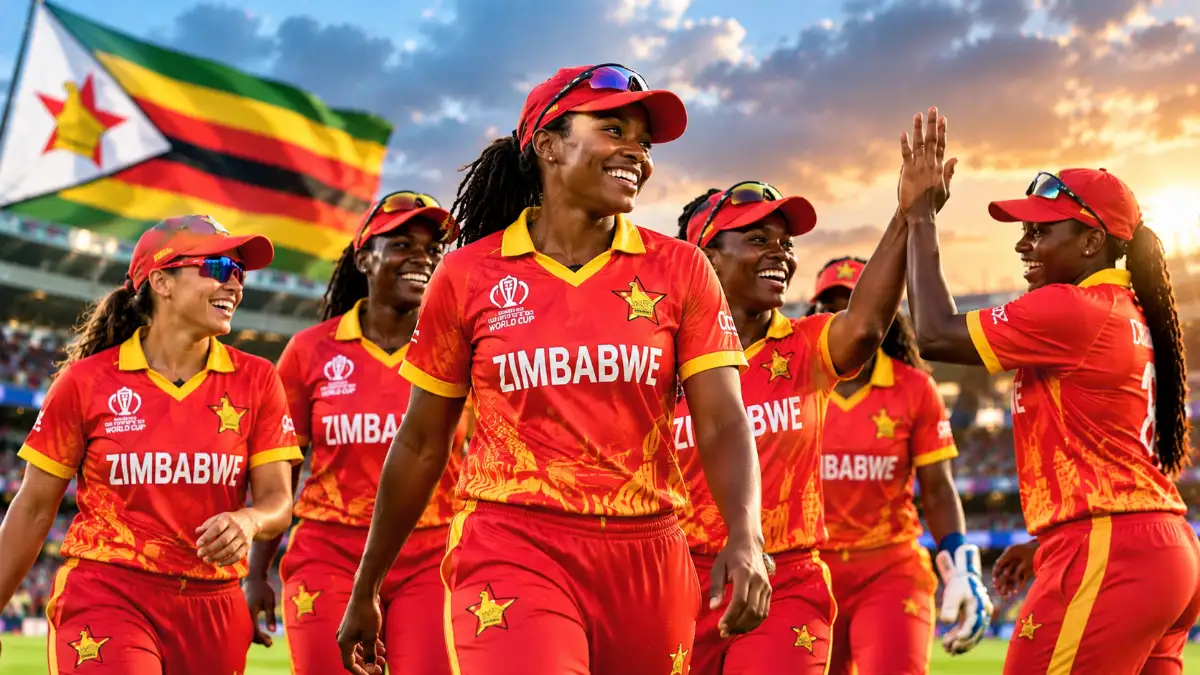
The Zimbabwe women’s team is a credible international team, but it is certainly not one of the world’s best sides in women’s cricket currently. Update for October 06, 2026: in women’s ODIs, Zimbabwe are ranked 14th by the ICC (whilst they hold on to 16th in women’s T20Is). Those places put the team away from the leading section, although recent performances suggest Zimbabwe would be able to compete with some of this stiffer opposition.
One of the most practical came on September 27, 202,- when Zimbabwe beat West Indies in Harare by four wickets. That was not merely a single bilateral win: it marked Zimbabwe’s maiden success in the ICC Women’s Championship. This was evident too recently in the ODIs and T20s, with Zimbabwe suffering heavy defeats in each of the first two T20Is, further exposing inconsistency as issue one when it comes to shoring up their place at elite level.
This translates to 50-over, or one-day, in international cricket terms for the newer readers. T20I is the shorter format where each team gets a maximum of 20 overs.
| Question | Quick answer |
| Is Zimbabwe Women’s cricket team good? | Yes, but currently as a developing rather than elite international side |
| Women’s ODI ranking | No. 14 |
| Women’s T20I ranking | No. 16 |
| Can they beat stronger teams? | Yes |
| Are they currently top-tier? | No |
| Main strength | Upset potential and developing talent |
| Main weakness | Consistency against stronger opposition |
Rankings checked: October 6, 2026.
How Good Is the Zimbabwe Women’s Cricket Team Right Now?
Referring to a cricket team as “good” is more complicated than just analyzing one scorecard. Just like a high seed team can lose for the first time in months without turning into a pumpkin, a team can win one big game – but dominating an entire series is another matter.
Zimbabwe are little more than a work in progress as an international side, but you can see with every game they gain confidence & competition. They possess enough quality to cause problems for established rivals and, on their best days, beat them. What they have not yet shown is the sort of week-to-week consistency that separates the best teams from merely good ones on the women’s side.
The only way to rate them now is by rankings, results and performances against stronger sides, player progress and how long they can remain good at cricket in a series.
- Read more: Is the Zimbabwe women’s cricket team good?
How We Evaluate Zimbabwe Women’s Team Quality
A useful assessment can be built around four factors:
- ICC ranking: Where Zimbabwe stand relative to other international teams.
- Recent results: Whether performances are trending upward or downward.
- Results against stronger teams: Whether Zimbabwe can turn competitive spells into victories.
- Series consistency: Whether good performances can be repeated rather than appearing once in a series.
Using those criteria produces a more useful answer than judging Zimbabwe only by their best win or worst loss.
| Factor | Current assessment |
| International ranking | Developing |
| Ability to cause upsets | Good |
| Consistency | Needs improvement |
| ODI competitiveness | Encouraging |
| T20I competitiveness | Below stronger teams |
| Overall verdict | Competitive developing side |
The purpose of this assessment is not to create an artificial score such as 6.8/10. It is to show exactly what Zimbabwe already does well and what separates them from stronger international teams.
Where Does Zimbabwe Women Rank in World Cricket?
The ICC rankings provide one of the clearest objective measures of Zimbabwe’s current position.
As of October 6, 2026, Zimbabwe are 14th in women’s ODIs with a rating of 15 and 16th in women’s T20Is with a rating of 121.
Those rankings do not mean Zimbabwe is incapable of competing with teams above them. They mean Zimbabwe has not yet accumulated the sustained international results required to move into the leading group.
Zimbabwe Women’s ODI Ranking
The No. 14 ODI position places Zimbabwe outside the elite group in 50-over cricket.
That gap matters because the best ODI teams generally combine deep batting lineups, multiple wicket-taking bowlers, reliable fielding and extensive experience in high-pressure games.
Zimbabwe are still developing those qualities across the entire XI. However, their ranking should not obscure signs of progress. Their September win over West Indies showed they can execute a complete ODI performance when their bowling creates an opportunity, and their batting completes the chase.
- Read more: Is the Zimbabwe women’s cricket team good?
Zimbabwe Women’s T20I Ranking
Zimbabwe’s No. 16 T20I ranking reflects a larger challenge in the shortest international format.
T20 cricket leaves less time to recover from a slow start, batting collapse or expensive bowling spell. Teams need boundary hitters, fast scoring through the middle overs, disciplined powerplay bowling, and players who can execute under constant pressure.
Zimbabwe’s recent series against West Indies highlighted several of those challenges.
What ICC Rankings Can and Cannot Tell You
ICC rankings are useful because they reward performance over time rather than reacting to one match.
That also means rankings should not be treated as a perfect prediction of what will happen in the next game. A No. 14 side can defeat a higher-ranked opponent.
Zimbabwe’s victory over West Indies demonstrates exactly that.
The important distinction is between potential and consistency. One major win proves a team can compete. Repeated wins are what eventually establish it among the stronger international sides.
What Do Zimbabwe Women’s Recent Results Tell Us?
Zimbabwe’s September 2026 ODI series against West Indies is probably the best recent snapshot of where the team stands.
Across three games, Zimbabwe produced one excellent victory but also suffered two convincing defeats. That combination captures both their upside and the work still required.
Zimbabwe’s ODI Win Over West Indies Showed Their Upside
On September 27, West Indies were bowled out for 139 in 39.3 overs. Zimbabwe then reached 140/6 in 40.5 overs, winning by four wickets with 55 balls remaining.
Nyasha Gwanzura played a major part with a career-best 4/33, helping Zimbabwe restrict West Indies to a chaseable total.
What makes the result meaningful is that Zimbabwe finished the job.
Developing teams sometimes put a stronger opponent under pressure but fail to convert that position. Zimbabwe instead dismissed West Indies cheaply and completed the chase.
The result also earned Zimbabwe their first points in the ICC Women’s Championship. That makes it an important milestone in the team’s development rather than merely a surprise bilateral victory.
The ODI Series Also Showed the Consistency Gap
The matches on either side of that victory were much more difficult.
West Indies won the first ODI by 99 runs, scoring 299/6 before bowling Zimbabwe out for 200. In the decider, West Indies made 271/5 and dismissed Zimbabwe for 180, winning by 91 runs.
| Match | Zimbabwe result | What it tells us |
| 1st ODI vs West Indies | Lost by 99 runs | Gap remains against stronger batting sides |
| 2nd ODI vs West Indies | Won by 4 wickets | Genuine upset potential |
| 3rd ODI vs West Indies | Lost by 91 runs | Consistency remains an issue |
This is why the balanced verdict matters. Zimbabwe were good enough to beat West Indies, but not yet consistent enough to control the series.
- Read more: Is the Zimbabwe women’s cricket team good?
Why Zimbabwe’s Recent T20I Results Raise Concerns
Zimbabwe’s first two T20Is against West Indies exposed a wider gap.
Rather than applying their ODI performance directly to the shorter format, it is better to examine T20 cricket separately.
First T20I Against West Indies
Zimbabwe scored 97/9 from 20 overs in the first T20I on October 3.
West Indies answered with 98/2 in 12.5 overs, winning by eight wickets with 43 balls remaining.
For Zimbabwe’s bowlers, defending 97 against a capable international batting lineup left very little margin for error. The result highlighted the importance of producing higher totals and finding more boundaries in the shortest format.
Second T20I Against West Indies
Two days later, Zimbabwe improved their total slightly to 106/7.
West Indies still completed the chase exceptionally quickly, reaching 108/2 in 9.1 overs and winning by eight wickets with 65 balls remaining.
The most revealing part of Zimbabwe’s innings was not the final total alone.
Kelis Ndhlovu and Beloved Biza put together a 46-run opening partnership, and Zimbabwe later reached 78/1 around the 13th over. From there, they slipped to 106/7. The ICC reported that Zimbabwe lost momentum while trying to raise the scoring rate, allowing West Indies to trigger a collapse.
What Those Results Reveal
Those matches point to three related problems.
First, Zimbabwe needs greater acceleration after establishing a platform. A steady start is useful, but T20 sides must usually increase their scoring rate substantially in the second half of an innings.
Second, losing one wicket cannot regularly become three or four in quick succession.
Third, Zimbabwe need better ways to control aggressive batting. In the second T20I, 17-year-old Eboni Brathwaite struck 57 from 23 balls as West Indies overwhelmed the target.
That does not mean Zimbabwe are simply “bad” at T20 cricket. It shows specifically where the performance gap lies.
Is Zimbabwe Better at ODI or T20I Cricket?
At present, Zimbabwe’s ODI cricket looks more encouraging.
Their official rankings support that assessment: No. 14 in ODIs compared with No. 16 in T20Is. Recent results do too. Zimbabwe defeated West Indies in a 50-over match, while the first two T20Is of the same tour ended in comfortable West Indies victories.
| Area | ODI | T20I |
| Current ICC ranking | 14th | 16th |
| Recent West Indies highlight | Won 2nd ODI | Lost first two T20Is |
| Time available to build innings | Greater | Limited |
| Current assessment | More encouraging | More work needed |
ODIs may currently give Zimbabwe’s batters more time to build partnerships and recover from quiet periods.
T20 cricket is less forgiving. A slow five-over stretch can decide an innings, while one expensive bowling over can transform a chase.
That makes power hitting, scoring acceleration, and rapid tactical adjustment especially important areas for Zimbabwe’s development.
- Read more: Is the Zimbabwe women’s cricket team good?
What Are Zimbabwe Women’s Biggest Strengths?
Zimbabwe’s current ranking does not tell the whole story. Several qualities give the team a genuine foundation for improvement.
They Can Produce Genuine Upsets
The West Indies ODI victory is the clearest recent example.
Zimbabwe did not merely stay close or lose narrowly. They bowled West Indies out and completed the chase with 55 balls still available.
That matters because it demonstrates that the team already possesses enough international quality to beat stronger opposition when different parts of the game come together.
Their Bowling Can Create Match-Winning Opportunities
Bowling West Indies out for 139 showed that Zimbabwe can create pressure rather than simply attempt to contain opponents.
Gwanzura’s 4/33 was the standout performance, but the wider lesson is more important: if Zimbabwe can regularly restrict stronger teams, their batters will face much more manageable chases.
They Have a Mix of Experienced and Emerging Players
Josephine Nkomo captained Zimbabwe for the September-October West Indies series.
The squad also included experienced players such as Nomvelo Sibanda, Chipo Mugeri-Tiripano, Modester Mupachikwa and Sharne Mayers, alongside younger players including Beloved Biza and Kelis Ndhlovu.
That combination matters in a developing national side. Experienced players can provide stability while emerging players raise the team’s long-term ceiling.
They Are Getting More Exposure Against Strong Opposition
Zimbabwe’s 2026 calendar has provided valuable international experience.
Before the West Indies series, they had already played ICC Women’s Championship matches in New Zealand and Pakistan and hosted South Africa for a five-match T20I series.
Zimbabwe also entered the 2025-29 Women’s Championship cycle for the first time. The expanded competition features 11 teams and acts as a qualification pathway toward the 2029 Women’s Cricket World Cup.
More games against stronger opponents do not guarantee immediate wins, but they expose weaknesses faster and give players experience against higher-quality batting and bowling.
Where Does Zimbabwe Women Still Need to Improve?
Zimbabwe’s weaknesses are clearer when recent match situations are examined rather than described in general terms.
Batting Depth
Stronger teams can often survive the loss of two or three top-order batters because runs continue throughout the lineup.
Zimbabwe needs more of that security.
If the top order fails or several wickets fall together, the lower middle order must be capable of rebuilding without allowing the scoring rate to disappear completely.
T20 Scoring Rate and Power Hitting
Totals of 97/9 and 106/7 were not enough to put sustained pressure on West Indies in the first two T20Is.
Modern T20 batting rewards teams that can combine several skills:
- rotate the strike without wasting deliveries;
- find boundaries throughout the innings;
- accelerate between overs 11 and 20;
- receive useful runs from the lower order.
Zimbabwe do not need every batter to become an all-out power hitter. They need more players who can move through different gears as the match demands.
Converting Strong Positions
The second T20I provides a particularly useful example.
At approximately 78/1 in the 13th over, Zimbabwe had a platform. They eventually finished on 106/7.
That is the kind of situation stronger teams regularly convert into a competitive finish.
For Zimbabwe, improvement means turning a promising start into a threatening total rather than treating the good start itself as success.
Containing Elite or Aggressive Batters
West Indies needed only 9.1 overs to chase 107 in the second T20I.
Zimbabwe needs more ways to interrupt that kind of momentum through:
- early wickets;
- tighter powerplay bowling;
- better execution of defensive plans;
- variation under pressure;
- sharper fielding that prevents easy boundaries.
Series-to-Series Consistency
This remains the central issue.
Good teams do not have to win every game. Even elite teams lose.
The difference is that strong sides make quality performances normal rather than surprising.
Zimbabwe’s next stage is therefore not simply producing another upset. It is making competitive cricket repeatable across three-match and five-match series.
Who Are the Key Players for Zimbabwe Women?
Zimbabwe’s September 2026 squad was led by Josephine Nkomo and combined experienced internationals with developing players.
Josephine Nkomo
Nkomo’s importance begins with leadership.
She returned to captain Zimbabwe during a busy period that included series against South Africa andthe West Indies. In a developing side, the captain’s value extends beyond individual runs or wickets because tactical stability and calm decision-making are especially important when younger players are being integrated.
Beloved Biza and Kelis Ndhlovu
Biza and Ndhlovu represent an important part of Zimbabwe’s next generation.
Against West Indies in the second T20I, they combined for a 46-run opening partnership, giving Zimbabwe a solid base.
The challenge now is turning promising starts into regular international production. Reliable opening partnerships would make it easier for Zimbabwe’s middle order to attack rather than rebuild.
Experienced Core
Nomvelo Sibanda, Chipo Mugeri-Tiripano, Modester Mupachikwa and Sharne Mayers were among the experienced players selected for the West Indies assignment.
Their role is important because developing teams cannot rely only on prospects. Experienced players help provide the stability needed while younger teammates adjust to stronger international opposition.
| Player | Current importance |
| Josephine Nkomo | Captain and leadership figure |
| Beloved Biza | Emerging top-order talent |
| Kelis Ndhlovu | Young player with growing responsibility |
| Nomvelo Sibanda | Experienced member of the squad |
| Chipo Mugeri-Tiripano | Experienced batting presence |
| Modester Mupachikwa | Experienced international and wicketkeeping option |
| Sharne Mayers | Experienced squad member |
Player roles and selections can change, so this section should be refreshed whenever the article is updated.
How Does Zimbabwe Compare With the Best Women’s Cricket Teams?
For a U.S. reader who does not closely follow women’s cricket, the easiest comparison is not individual star versus individual star.
The bigger difference is structural.
Elite teams generally have more batting depth, greater power hitting, multiple high-quality bowling options, and players accustomed to pressure through international and professional domestic competitions.
| Area | Zimbabwe | Elite women’s teams |
| Batting depth | Developing | Usually deep |
| Boundary hitting | Inconsistent | Major strength |
| Bowling | Competitive in spells | Pressure sustained for longer |
| Match experience | Growing | Extensive |
| Recovery from collapses | Developing | Usually stronger |
| Series consistency | Main challenge | Major strength |
| Upset capability | Yes | Expected to win regularly |
The final row is particularly important.
For Zimbabwe, beating a stronger opponent is noteworthy.
For an elite team, beating lower-ranked opposition is normally the expected result. That difference in expectation is one of the clearest ways to understand where Zimbabwe currently stands.
Where Does Zimbabwe Fit in the Women’s Cricket Hierarchy?
A simple tier system can make the international landscape easier to understand.
This is an editorial framework, not an official ICC classification.
Elite Tier
Elite teams combine deep player pools, professional experience, strong domestic systems, and regular contention in major ICC tournaments.
They are expected to win most bilateral series against lower-ranked opposition.
Established International Tier
These teams may not dominate major tournaments, but they can regularly challenge elite opposition and usually have enough quality to compete across full series.
Their wins against stronger teams are not treated as major surprises.
Developing International Tier – Where Zimbabwe Currently Fits
Zimbabwe fit most naturally into the developing tier.
The evidence is consistent:
- they rank outside the leading group;
- they can beat established opposition;
- they have emerging talent;
- they are gaining stronger international exposure;
- their performances still fluctuate sharply between matches.
Their 2026 entry into the ICC Women’s Championship is also significant because it gives Zimbabwe more regular 50-over cricket against strong opponents as part of the pathway toward the 2029 World Cup.
Emerging Teams
Emerging teams are generally earlier in their development and may still be building the depth, infrastructure, or regular international exposure needed to compete consistently.
Zimbabwe should not be grouped with teams only beginning that process. They already have meaningful international experience and have shown they can defeat established opponents.
Women’s cricket competitive ladder:
Elite → Established → Developing [Zimbabwe] → Emerging
Again, this ladder is an analytical tool, not an ICC designation.
Can Zimbabwe Women Beat Top International Teams?
Yes. The more important question is how often.
Their victory over West Indies proves Zimbabwe can defeat a stronger international opponent when their bowling creates early pressure and their batting handles the chase.
What they have not yet shown is the ability to repeat those results often enough to be treated as one of the world’s leading sides.
What Has to Go Right for an Upset?
Against higher-ranked opposition, Zimbabwe improve their chances substantially when they can:
- take early wickets;
- restrict the opposition to a manageable total;
- avoid clusters of batting dismissals;
- build at least one significant partnership;
- prevent easy runs in the field;
- maintain scoring momentum after a good start;
- convert a promising match position into a result.
The West Indies ODI win followed much of that pattern: strong bowling created an achievable chase, and Zimbabwe completed it.
What Would Make Zimbabwe a Stronger Women’s Cricket Team?
Zimbabwe already has evidence of potential. Their next challenge is converting potential into repeatable performance.
More Reliable Top-Order Runs
A dependable top three reduces pressure on everyone else.
If Zimbabwe can reach the middle overs with wickets in hand more regularly, batters lower down the order can focus on acceleration rather than rescue work.
Better T20 Acceleration
The second West Indies T20I shows why this matters.
Reaching 78/1 provided Zimbabwe with a strong base. Finishing on 106/7 meant the advantage disappeared.
The next step is learning to turn those platforms into significantly larger totals.
Greater Batting Depth
Longer batting lineups make teams harder to finish off.
Runs from Nos. 6, 7 and 8 can transform an ordinary total into a defendable one, particularly in T20 cricket where 15 or 20 late runs can materially change a match.
More Competitive Matches Against Higher-Ranked Teams
Zimbabwe are already moving in this direction.
Their 2026 program included matches in New Zealand and Pakistan, a home T20I series against South Africa and the West Indies tour.
They also appointed experienced New Zealand coach Mark Coles in September 2026 as part of a wider effort to build a sustainable high-performance environment around the women’s team.
Turn Upsets Into Repeatable Results
This is ultimately the biggest goal.
One victory shows potential. Regular victories show quality.
Zimbabwe will move closer to the established international tier when wins over stronger opponents become part of a pattern rather than isolated highlights.
How to Judge Zimbabwe Women’s Progress Going Forward
Readers do not need an advanced statistics model to tell whether Zimbabwe are improving.
When the team plays its next series, watch these indicators:
- Has the ODI or T20I ranking improved?
- Are Zimbabwe regularly posting totals that remain competitive deep into matches?
- Are they beating teams ranked above them more often?
- Are defeats becoming closer?
- Are younger players becoming reliable international starters?
- Are strong individual performances leading to wins?
- Can Zimbabwe stay competitive across an entire three- or five-match series?
Another useful question is whether the team’s good positions are lasting longer.
If Zimbabwe increasingly turn starts such as 78/1 into strong totals, or follow one upset win with another competitive performance, that would be a clearer sign of progress than any single headline result.
The third and final T20I against West Indies is scheduled for October 7, 2026, so the T20 series assessment in this article reflects results available through October 6.
Final Verdict – Is the Zimbabwe Women’s Cricket Team Good?
Zimbabwe Women are good enough to be taken seriously at international level and dangerous enough to beat stronger opponents, but they are not yet an elite women’s cricket team.
Their No. 14 ODI ranking and No. 16 T20I ranking show there is still substantial ground to make up. At the same time, their historic September 27 win over West Indies shows the team has genuine match-winning ability rather than merely developmental promise.
The biggest issue is consistency. Zimbabwe lost the other two ODIs against West Indies by 99 and 91 runs and were comfortably beaten in the first two T20Is.
That makes a competitive developing international side the fairest description today.
The next step for readers is to watch Zimbabwe’s ICC rankings, performances against higher-ranked opposition, and results across complete series. The clearest sign of progress will not be one upset-it will be when those victories begin happening regularly.
Frequently Asked Questions
Nov 26, 2023 · Is the Zimbabwe women’s cricket team bad?
And while Zimbabwe Women are an established international team, they perform one tier below the top echelons at present. The fact that they are able to defeat West Indies in an ODI indicates there is genuine quality, yet the rankings and less consistent series results suggest a work in progress.
Ranked 172nd in the ICC, what are Zimbabwe Women’s chances?
According to the ICC, Zimbabwe currently holds the 14th spot in women’s ODIs and 16th in women’s T20Is (as of October 6, 2023).
So the question begs: are Zimbabwe Women a top cricketing team?
Not currently. Zimbabwe can compete with, and now and again beat, better teams, yet top-ranked sides play those performances far more consistently over whole series and big tournaments.
A few days later, Zimbabwe Women defeated West Indies simply with the help of data training up to October 2023.
Yes. Zimbabwe beat West Indies by 4 wickets in the 2nd ODI, Harare (September 27, 2026). West Indies bowled out for 139; Zimbabwe 140/6 (49.1 overs) by 4 wickets with 55 balls remaining.
Which format is good for Zimbabwe Women:n ODI or T20I?
Given their form, perspective, results, and ranking, ODI cricket. Zimbabwe were 14th in ODIs compared to 16th in T20s, and in a recent home series against West Indies, they did win an ODI but lost the first two T20Is more than comfortably.
Who is the captain of the Zimbabwe women’s cricket team?
Zimbabwe captain Josephine Nkomo led Zimbabwe in the September-October 2026 ODI and T20I series against West Indies.
So what exactly are the best Players of the Zimbabwe Women’s Cricket Team?
The current crop includes the likes of captain Josephine Nkomo, veterans like Nomvelo Sibanda, Chipo Mugeri-Tiripano, Modester Mupachikwa and Sharne Mayers, and also budding talents such as Beloved Biza and Kelis Ndhlovu. Mohammed took 4/4,5, and Nyasha Gwanzura produced a career-best 4/33 in the landmark win over West Indies in ODIs.
Can Zimbabwe Women pull an upset against higher-ranked teams?
Yes. September 2026’s win over West Indies shows they can overcome top opposition. The key, however, will be to repeat those performances frequently enough that they significantly upgrade their league standing and series record.
What area does Zimbabwe Women need the most to improve?
Key areas have been bat depth, aggressive T20 scoring, turning strong starts into a total that matches up with the opposition selection, and head-to-head performance vs aggressive batting in ODI series and across entire series.
Can Zimbabwe be a fierce contender for the women’s cricket team?
It is likely, but any significant way off will need prolonged growth. Additional matches against higher-ranked opponents, improved player development pathways, stronger batting depth, and robust performance in T20 would move Zimbabwe closer to the other established (and eventually elite) levels.
